Consult · Managers
How to run an AI readiness assessment
An AI readiness assessment is a structured review of whether a company has the strategy, data, systems, skills, and governance needed to use AI successfully. A readiness assessment scores each area, identifies the gaps that would block a first project, and produces a short list of fixes to complete before or during an initial pilot.
- Reading time
- 8 min
- Chapters
- 6
- Last reviewed
- November 10, 2026
- Author
- Lingows AI Team
- Difficulty
- Beginner
Before you start
- An executive sponsor who will act on the findings
- Access to leaders and frontline staff in two or three departments
- Existing documents such as system lists and data policies
The steps at a glance
- Step 01
Name a sponsor and set the scope
Choose an executive sponsor and the two or three departments to assess first.
- Step 02
Collect documents
Gather system lists, data policies, process maps, and any existing AI policy.
- Step 03
Interview and survey
Interview leaders, IT, security, and frontline staff, and survey wider teams.
- Step 04
Score each area
Rate strategy, data, systems, people, governance, and risk from one to five with evidence.
- Step 05
Identify blocking gaps
Rank gaps by how many valuable use cases each gap blocks.
- Step 06
Write the report
Summarize scores, fixes with owners, and candidate first projects for leadership.
Chapter 01
What does an AI readiness assessment measure?
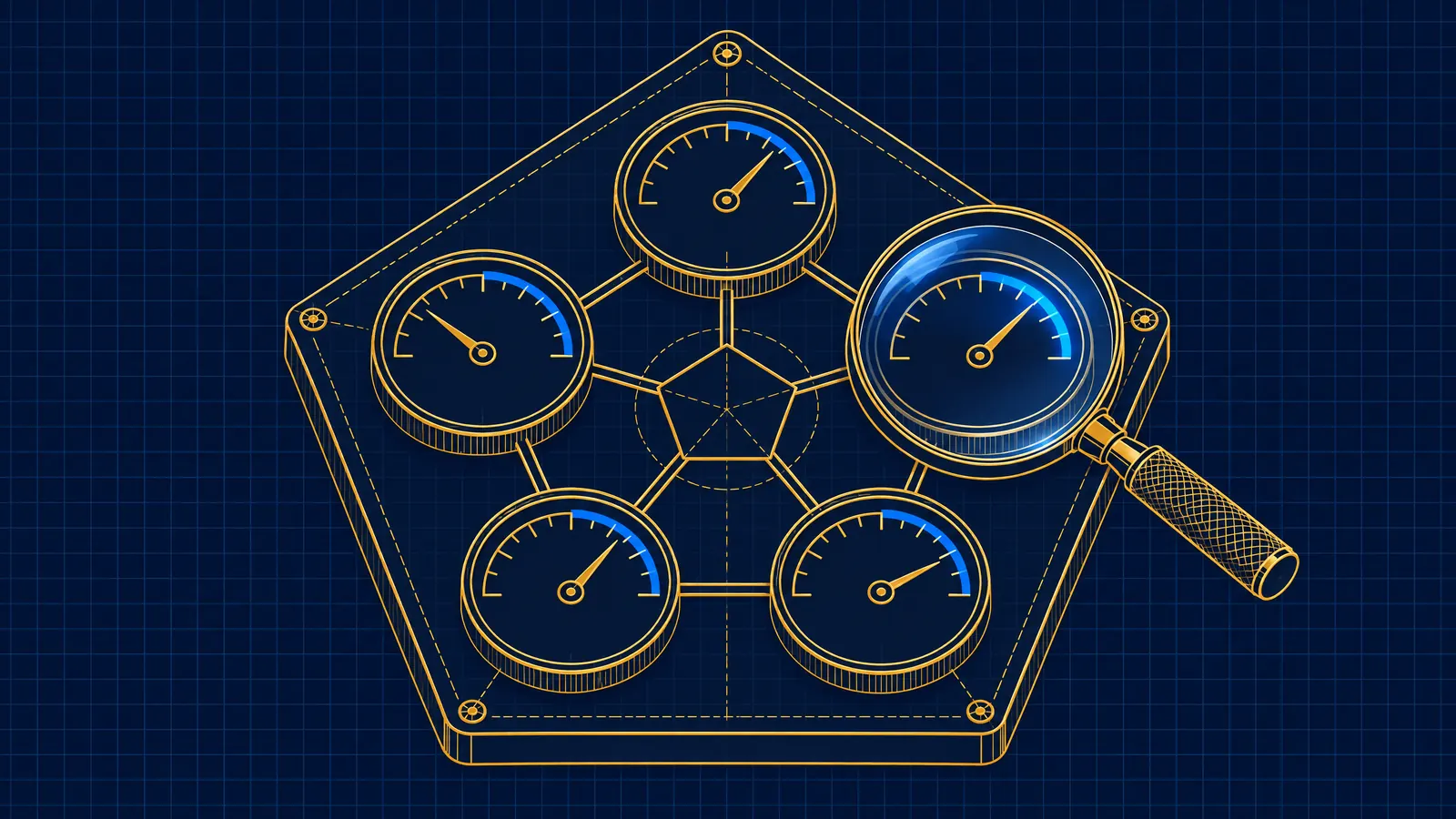
An AI readiness assessment measures six areas: strategy and leadership support, data quality and access, systems and integration, people and skills, governance and policy, and risk tolerance. Each area receives a score from evidence gathered in interviews and document reviews, so leadership can see which gaps would slow or block an AI project.
Readiness is not a single yes or no. A company can have excellent data and no policy, or strong leadership interest and core systems that cannot connect to anything. Splitting the assessment into areas shows exactly where the friction will come from, which is far more useful than an overall grade.
The six areas below cover what most AI projects depend on. Some companies add a seventh area for industry regulation when health, financial, or legal obligations shape every decision.
Six readiness areas
| Area | What to check | Evidence to collect |
|---|---|---|
| Strategy and leadership | Whether leaders agree on why the company wants AI and who sponsors the work | Stated goals, a named sponsor, budget intent |
| Data | Whether the information a use case needs is digital, accessible, and reasonably accurate | Data inventory, data owners, known quality problems |
| Systems | Whether core software exposes APIs or exports that AI tools can use | System list, integration options, vendor terms |
| People and skills | Whether staff know how to use AI tools and who could own AI work | Survey results, current tool use, internal champions |
| Governance | Whether a policy says which tools and data are allowed | AI use policy, security review process |
| Risk | How the company handles errors, regulated data, and customer impact | Regulatory obligations, review steps, incident process |
Chapter 02
Who should take part in an AI readiness assessment?
An AI readiness assessment should involve an executive sponsor, the leaders of two or three candidate departments, someone from IT or systems administration, a person responsible for security or compliance, and a few frontline staff who do the daily work. A mix of perspectives prevents an assessment that reflects only leadership assumptions.
Leaders tend to describe processes as designed. Frontline staff describe processes as lived, including the workarounds, the spreadsheets nobody mentions, and the systems that fail on Fridays. Both views are needed, and the gap between them is often the most useful finding in the assessment.
Keep the group small enough to schedule. Start with the departments most likely to host a first project rather than trying to cover the whole company at once.
Chapter 03
How do you gather evidence for each readiness area?
Gathering evidence for each readiness area combines short interviews, a brief survey for wider staff, and a review of existing documents such as system lists, data policies, and process maps. Ask for examples rather than opinions. A team that says data is clean should be able to show a recent report built from the same records.
Questions that produce evidence
- StrategyWhich decision or process would leadership most like AI to improve, and who would own the result?
- DataWhere does the information for that process live today, and who can export a sample?
- SystemsWhich systems hold the records, and does each one offer an API, an export, or neither?
- PeopleWho already uses AI tools at work, for which tasks, and with what results?
- GovernanceWhich tools are approved, and what happens when someone wants to try a new one?
- RiskWhat is the worst outcome if an AI system makes a mistake in this process, and who would notice?
Write down each answer with the source. When two people give conflicting answers, record both. Conflicts usually point to a process that works differently from how leadership believes, which matters for any project that touches the process.
Chapter 04
How do you score AI readiness?
Scoring AI readiness works best on a simple one to five scale for each area, with a written description of what each score means. A one means the area would block any AI project. A five means the area is ready for production systems. Scores should cite evidence, not impressions, so the result can be defended.
Scoring scale
| Score | Meaning | Typical next step |
|---|---|---|
| 1 | Blocks any AI project | Fix before any pilot |
| 2 | Blocks most AI projects | Fix before choosing a first use case |
| 3 | Ready for a contained pilot | Pilot with close human review |
| 4 | Ready for wider pilots | Expand with monitoring |
| 5 | Ready for production systems | Scale and operate |
Score each area separately and resist averaging the scores into one number. An average of three can hide a one in governance, and a single blocking area is what stalls a project.
For a quick first pass, the free AI readiness assessment tool produces a self-scored view in a few minutes with no email required. A full assessment then tests the self-scores against evidence.
Chapter 05
What should a company do with low readiness scores?
A company with low readiness scores should fix the gaps that block the chosen first use case, not every gap at once. A low data score matters only for use cases that depend on the weak data. Many companies can start a contained pilot while foundational work on policy, data access, and skills continues in parallel.
Low scores are useful. They tell the company where to invest before money goes into a pilot that would fail for predictable reasons. The mistake is treating readiness as a gate the whole company must pass before any AI work begins.
Match fixes to use cases. A customer support drafting pilot needs approved tools, a policy, and access to help documentation. The same company may have poor financial data, but that gap does not block the support pilot.
Chapter 06
What should an AI readiness report include?
An AI readiness report should include the score and evidence for each area, the gaps that block the most valuable use cases, a short list of recommended fixes with owners, and two or three candidate first projects that fit the current readiness level. The report should fit in a few pages so leadership can act on the findings.
Checklist
Readiness report checklist
The report feeds directly into planning. The guide on picking a first AI use case covers choosing among the candidates, and the guide on building an AI roadmap covers sequencing the fixes and pilots. Lingows AI runs readiness assessments as part of AI consulting, and TitanWave, a Lingows group company, delivers a structured AI Blueprint built on the same questions.
01Summary
Key takeaways
What to remember
- Assess readiness in six separate areas instead of one overall grade.
- Include frontline staff, IT, and security, not only leadership.
- Score from evidence and examples, never from impressions alone.
- Read low scores against specific use cases, not the whole company.
- Finish with fixes, owners, and two or three candidate first projects.
02FAQ
Questions about this guide
How much effort does an AI readiness assessment take?
The effort for an AI readiness assessment depends on company size, the number of departments in scope, and how quickly documents and interviews can be scheduled. A focused assessment covers two or three candidate departments first. Expanding the scope later is easier than running a long assessment before any decision is made.
Is an AI readiness assessment the same as an AI audit?
An AI readiness assessment is not the same as an AI audit. A readiness assessment looks forward and asks whether a company can adopt AI successfully. An AI audit examines AI systems already in use and checks performance, fairness, security, and compliance against a defined standard or regulation.
Can a company assess AI readiness without outside help?
A company can assess AI readiness without outside help by using the six areas, the scoring scale, and the report checklist in the steps above. Outside help is most useful when internal teams disagree, when technical feasibility is unclear, or when leadership wants an independent view before committing budget.
Which readiness gap should be fixed first?
The readiness gap to fix first is the gap that blocks the most valuable candidate use case. For many companies the blocking gap is data access or the absence of an AI use policy, because both affect every project. Skills gaps can usually close through training while a contained pilot runs.
How often should AI readiness be reassessed?
AI readiness should be reassessed after major changes such as a new core system, a new AI use policy, or the end of a first pilot, and at least once a year otherwise. Readiness improves as foundational work finishes, so a reassessment often shows that previously blocked use cases are now practical.
Written by
Lingows AI Team
Engineering and strategy team, Lingows AI
The Lingows AI team has built AI systems since 2017 and software since 2012. Collective posts cover model landscape changes, tooling selection, and the direction of applied AI.
Related software
TitanWave
AI onboarding that shows where AI works for a company and where it does not.
Put this guide to work with AI Consulting.
AI consulting turns a guide like this into a scoped plan for your company: where AI fits, where it does not, and what to build first.